guides7 min read
The 12 Astrological Houses: A Complete Reference
Natal AI Team(Astrology & AI Research)••Updated March 15, 2026
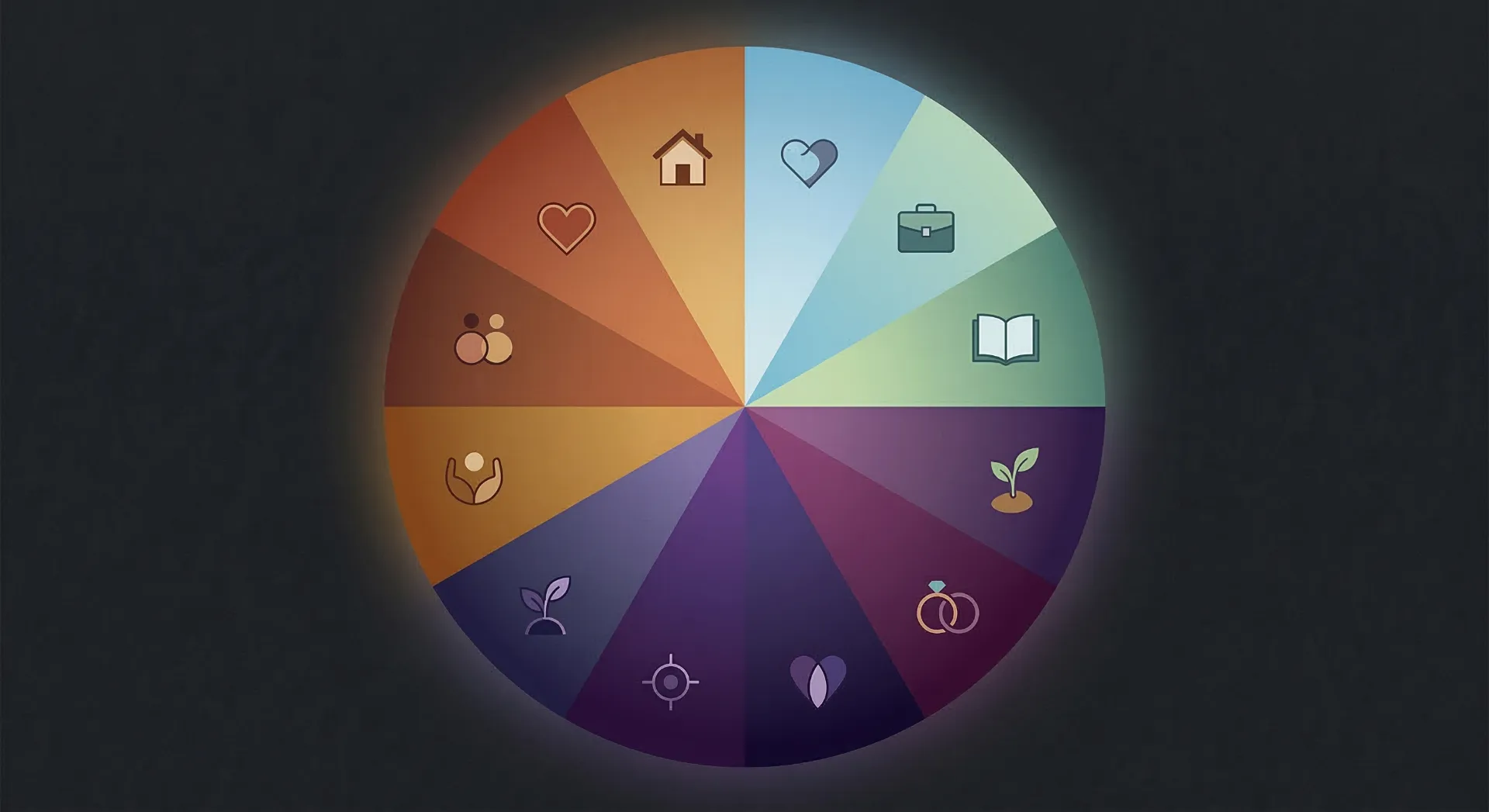
The zodiac signs describe how energy expresses. The houses describe where it expresses — which area of your life is activated. Understanding the houses turns a list of planetary placements into a map of your lived experience.
The 12 houses divide your birth chart into sections, each governing a specific domain of life. The 1st house begins at your ascendant (rising sign) and the houses proceed counterclockwise around the chart.
Which zodiac sign falls on each house cusp — and which planets land in each house — creates the unique structure of your chart.
| House | Life Area | Ruling Planet | Element | Key Questions |
|---|---|---|---|---|
| 1st | Self and identity | Mars | Fire | How do I present myself to the world? |
| 2nd | Money and values | Venus | Earth | What do I value? How do I earn and spend? |
| 3rd | Communication | Mercury | Air | How do I think and express ideas? |
| 4th | Home and family | Moon | Water | What is my emotional foundation? |
| 5th | Creativity and romance | Sun | Fire | What brings me joy and self-expression? |
| 6th | Health and daily work | Mercury | Earth | What are my health patterns and daily routines? |
| 7th | Partnerships | Venus | Air | What do I seek in committed relationships? |
| 8th | Transformation | Pluto | Water | Where do I experience deep change? |
| 9th | Philosophy and travel | Jupiter | Fire | What do I believe? Where do I find meaning? |
| 10th | Career and reputation | Saturn | Earth | What is my public legacy? |
| 11th | Community and hopes | Uranus | Air | What groups do I belong to? |
| 12th | Subconscious | Neptune | Water | What patterns run beneath the surface? |
The angular houses are the four most powerful positions in a chart. Planets placed here express themselves forcefully and visibly.
The 1st house is your ascendant. It describes your physical presentation, first impressions, instinctive behavior, and approach to life. Planets here are core to how others experience you.
Sun in the 1st: Strong sense of self, leadership presence, identity-focused life Moon in the 1st: Emotionally transparent, nurturing presence, mood shifts are visible Mars in the 1st: Assertive, competitive, physically active, direct in approach
The 4th house represents your roots — home life, family of origin, emotional security, and the foundation you build your life on. It also governs the end of life and what you leave behind.
Saturn in the 4th: Serious family responsibilities, structured home life, possible emotional restriction in childhood Venus in the 4th: Beautiful home environment, love of domestic life, harmonious family relationships
The 7th house governs committed one-on-one relationships — marriage, business partnerships, and close collaborations. It describes what you seek in a partner and how you function within partnership. For a deeper look at how the 7th house and other placements affect compatibility, see our synastry guide.
Jupiter in the 7th: Generous partners, growth through relationships, possibly multiple significant partnerships Pluto in the 7th: Intense, transformative relationships, power dynamics in partnerships
The 10th house (Midheaven) represents your public image, career path, achievements, and social status. It describes what you are known for and how you interact with authority.
Mars in the 10th: Ambitious, competitive in career, leadership roles, entrepreneurial drive Neptune in the 10th: Creative or spiritual career path, public image may be idealized or confusing
Succedent houses follow the angular houses and deal with what you accumulate, create, share, and aspire to.
What you own, earn, and value. Your relationship with money and material security. Your sense of self-worth beyond identity.
Self-expression, artistic creation, romantic affairs (as opposed to committed partnerships, which are 7th house), children, hobbies, and anything that brings pure joy.
Deep psychological change, shared finances (inheritance, investments, debt), intimacy, death and rebirth themes, and power dynamics. The 8th house governs everything that is hidden or taboo.
Social networks, friendships, group affiliations, long-term goals, and hopes for the future. The 11th house describes the communities you belong to and your role within them.
Cadent houses are about processing, learning, and adapting. They are less overtly powerful than angular houses but describe essential mental and spiritual functions.
Daily communication, siblings, neighbors, short trips, early education, and how you process and share information.
Daily routines, health habits, work environment (your daily job, not your career arc), pets, and acts of service. The 6th house describes how you maintain your body and contribute through work.
Higher education, long-distance travel, religion, philosophy, publishing, and the search for meaning. Where the 3rd house is local and factual, the 9th house is global and philosophical.
The hidden realm. The 12th house governs the subconscious mind, self-sabotage patterns, hidden enemies, spiritual life, isolation, and institutions (hospitals, prisons). Planets here operate behind the scenes — powerful but not always visible.
Most people have several empty houses. This is completely normal — there are 10 planets and 12 houses, so at least 2 houses will always be empty, and usually more.
An empty house does not mean that life area is absent from your life. It means no planet directs concentrated energy there. To understand an empty house:
That ruling planet's placement describes how the empty house's themes play out for you. For example, if your 7th house is empty with Sagittarius on the cusp, look at where Jupiter (Sagittarius's ruler) is in your chart. Jupiter in the 10th house might suggest you meet partners through career or that your relationships have a public quality.
Different house systems divide the chart differently, which can place the same planet in different houses:
| System | Method | Common Use |
|---|---|---|
| Placidus | Time-based division, unequal house sizes | Most common in Western astrology |
| Whole Sign | One sign = one house, equal sizes | Oldest system, popular in traditional astrology |
| Porphyry | Equal division of each quadrant | Less common, used by some apps |
| Equal | 30° per house from ascendant | Simple, used in some educational contexts |
| Koch | Time-based, similar to Placidus | Popular in German-speaking countries |
The choice of house system can shift planets across house boundaries. A planet at 29° of a sign might be in the 7th house in Placidus but the 8th house in Whole Sign. This is one of the most common reasons different apps give different readings from the same birth data.
Natal AI defaults to Placidus, the professional standard in Western astrology, and lets you select your preferred system.
To see how the houses interact with planets and aspects in your specific chart, ask the Natal AI chatbot about any house placement. To understand how transits activate different houses over time, see our transits guide. For the full picture of how to read your chart, see our birth chart reading guide.